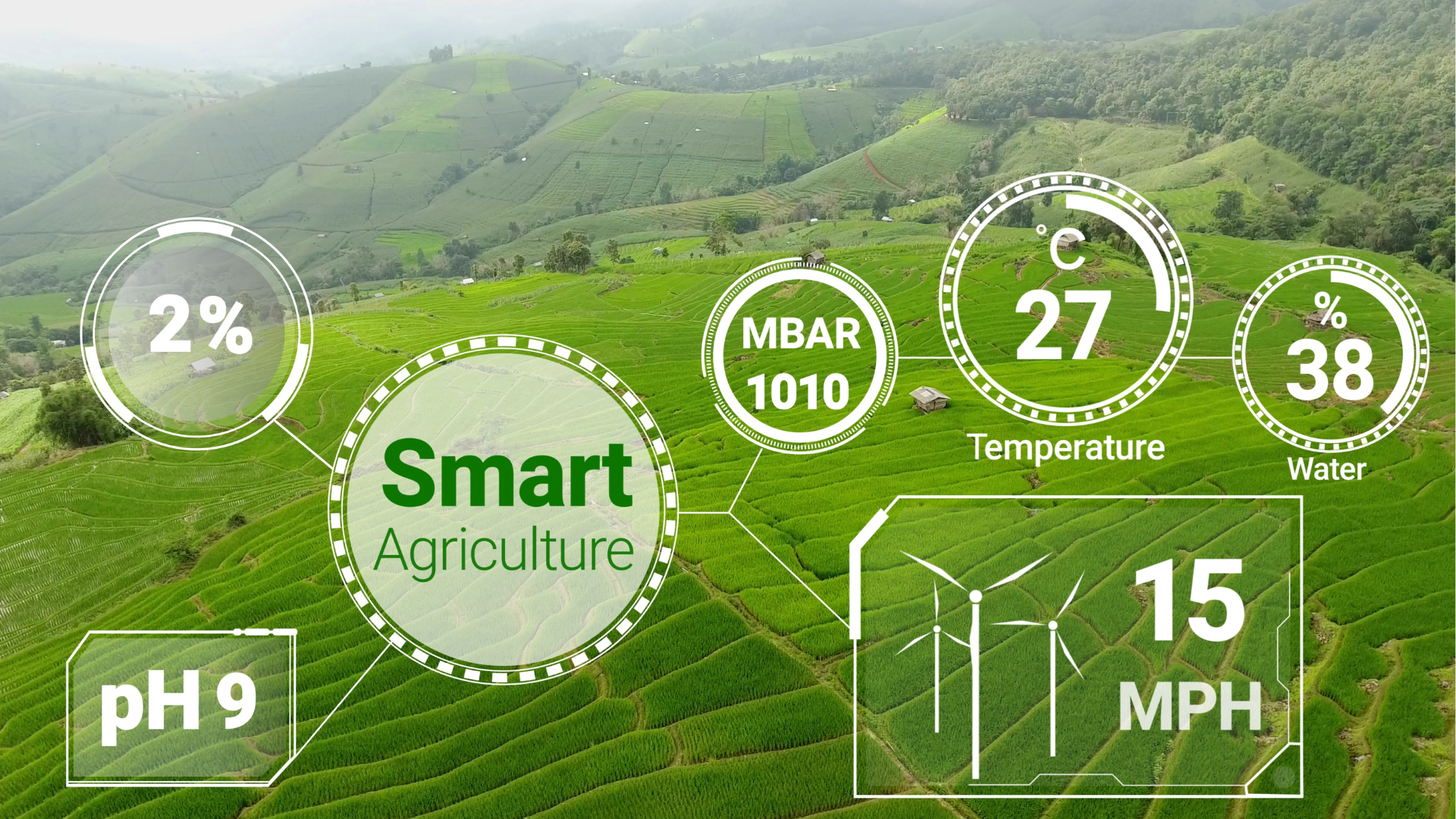





Currently, agriculture is one of the main sources of carbon dioxide (CO₂) and greenhouse gas emissions globally. However, this situation could change if the world transitions to carbon farming or expands the adoption of carbon-based practices. Agriculture would then cease to be an emission source and become a carbon sink . This approach also offers many other benefits: improved soil health, efficient water resource use, reduced chemical input costs, and the creation of carbon credits . While implementation remains challenging, particularly for traditional industrial farms, modern agricultural technology is greatly supporting this transition.
.png)
What is Carbon Farming?
At its core, carbon farming is harnessing the power of agriculture to address climate change . This approach encompasses practices aimed at removing CO₂ from the atmosphere through photosynthesis and storage in soil, crops, and other organic matter. Many techniques, such as cover crops and reduced tillage, are already familiar in organic and regenerative agriculture.
Carbon farming not only contributes to mitigating climate change but also offers numerous accompanying benefits: improved soil health, water retention, and increased biodiversity. Furthermore, farmers can generate additional income by participating in the carbon credit market. Combining agricultural knowledge with climate science, carbon farming is a potential solution to global climate problems.
Common Practices in Carbon Farming
Carbon-smart farming aims to sequester carbon in the soil and/or reduce greenhouse gas emissions associated with agriculture. These practices can be implemented independently or integrated into overall farming plans, and also serve as soil conservation measures.
1️⃣ Eliminate bare ground:
Bare land easily loses carbon due to the effects of wind, rain, temperature, etc., making carbon absorption difficult. Instead, planting legumes (clover, etc.) on bare ground helps to cover the ground, prevent erosion, supplement nutrients, maintain soil health, and retain organic carbon in the soil.
Bare land easily loses carbon due to the effects of wind, rain, temperature, etc., making carbon absorption difficult. Instead, planting legumes (clover, etc.) on bare ground helps to cover the ground, prevent erosion, supplement nutrients, maintain soil health, and retain organic carbon in the soil.
2️⃣ Companion cropping:
This involves planting crops that support each other in terms of nutrition and pest control. For example, intercropping legumes with nutrient-dense plants helps reduce fertilizer use and improve soil ecosystem.
This involves planting crops that support each other in terms of nutrition and pest control. For example, intercropping legumes with nutrient-dense plants helps reduce fertilizer use and improve soil ecosystem.
3️⃣ Agroforestry:
Combining perennial crops with food crops and fruit trees helps to:
• Increase productivity,
• Prevent soil erosion,
• Purify air and water,
• Create habitats for animals,
• Diversify income sources.
Combining perennial crops with food crops and fruit trees helps to:
• Increase productivity,
• Prevent soil erosion,
• Purify air and water,
• Create habitats for animals,
• Diversify income sources.
4️⃣ Cover cropping:
Cover cropping helps protect the soil surface, retain nutrients, increase organic carbon in the soil, improve soil fertility, and remove CO₂ from the atmosphere.
Cover cropping helps protect the soil surface, retain nutrients, increase organic carbon in the soil, improve soil fertility, and remove CO₂ from the atmosphere.
5️⃣ Reduced Tillage:
Using tillage-free or minimally tilling seeders helps retain plant residues in the field, limiting organic carbon loss, reducing erosion, increasing water retention, and improving soil biology.
Using tillage-free or minimally tilling seeders helps retain plant residues in the field, limiting organic carbon loss, reducing erosion, increasing water retention, and improving soil biology.
6️⃣ Crop residue management:
Leaving crop residue in the field after harvest creates a protective "mulch" for the soil, while microorganisms decompose the residue, improving soil structure and storing carbon.
Leaving crop residue in the field after harvest creates a protective "mulch" for the soil, while microorganisms decompose the residue, improving soil structure and storing carbon.
7️⃣ Reduce the use of chemical fertilizers.
Nitrogen fertilizers are essential for food security but account for about 5% of global greenhouse gas emissions. Reducing the use of chemical fertilizers and encouraging the use of organic fertilizers will cut emissions while still ensuring soil fertility.
Nitrogen fertilizers are essential for food security but account for about 5% of global greenhouse gas emissions. Reducing the use of chemical fertilizers and encouraging the use of organic fertilizers will cut emissions while still ensuring soil fertility.
8️⃣ Improve farm operational efficiency:
Utilize farm management software, smart irrigation management, and variable rate measurement (VRA) technology to optimize input costs, reduce emissions, and increase productivity.
Utilize farm management software, smart irrigation management, and variable rate measurement (VRA) technology to optimize input costs, reduce emissions, and increase productivity.
.png)
Benefits and Challenges
Benefits:
✅ Improves soil health and water retention.
✅ Increases biodiversity, supporting beneficial microorganisms and organisms.
✅ Generates carbon credit revenue.
✅ Reduces input costs (fertilizers, irrigation water, etc.).
✅ Sustainable land management, protecting long-term productivity.
✅ Improves soil health and water retention.
✅ Increases biodiversity, supporting beneficial microorganisms and organisms.
✅ Generates carbon credit revenue.
✅ Reduces input costs (fertilizers, irrigation water, etc.).
✅ Sustainable land management, protecting long-term productivity.
Challenges:
⚠️ High initial investment costs (equipment, training).
⚠️ Slowing carbon sequestration rate as soil health improves.
⚠️ Land requirements for certain techniques such as cover crops and agroforestry may reduce short-term yields.
⚠️ High initial investment costs (equipment, training).
⚠️ Slowing carbon sequestration rate as soil health improves.
⚠️ Land requirements for certain techniques such as cover crops and agroforestry may reduce short-term yields.
However, the environmental and economic benefits of carbon farming still outweigh the potential risks.
Source: EOS DATA ANALYTICS
Source: EOS DATA ANALYTICS